Every March, green decorations appear everywhere—on parade floats, pub walls, festival posters, and band stages. Two symbols dominate the season: the shamrock and the four-leaf clover.
They look similar and are often used interchangeably during St. Patrick’s Day celebrations, but historically and botanically they are quite different. One represents Ireland’s identity and spiritual heritage, while the other is simply a rare symbol of luck.
Understanding the difference makes St. Patrick’s Day a little richer—and gives those little green leaves a deeper story.

The Shamrock: Ireland’s Historic Symbol
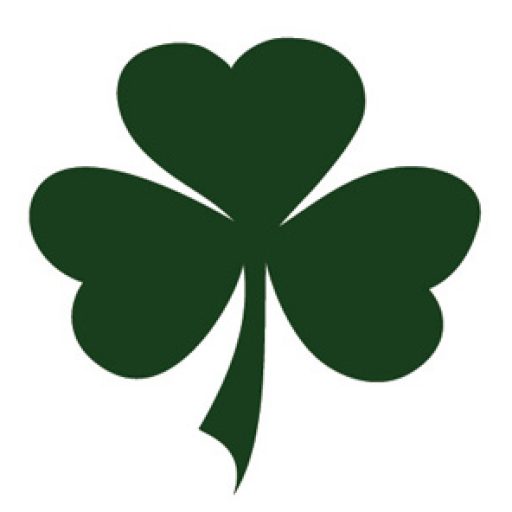
The shamrock is traditionally a three-leaf clover, also known as a trefoil. The word comes from the Irish Gaelic seamróg, meaning “little clover.”
According to Irish tradition, St. Patrick used the shamrock in the 5th century to explain the concept of the Holy Trinity—Father, Son, and Holy Spirit—to the people of Ireland. Each of the three leaves represented one part of the Trinity, while the single stem symbolized their unity.
While historians debate whether the story is literal or symbolic, the shamrock became deeply associated with both Irish Christianity and Irish identity.
By the 18th century, the shamrock had evolved into a broader national symbol. Irish patriots wore it as a sign of unity and cultural pride, particularly during periods of British rule. Over time, it became one of the most recognizable symbols of Ireland itself.
Today the shamrock appears on:
- Irish military insignia
- National airline branding
- Tourism campaigns
- Sports teams
- St. Patrick’s Day celebrations around the world
In short, the shamrock represents Ireland’s heritage, faith, and national identity.
The Four-Leaf Clover: Nature’s Lucky Accident
The four-leaf clover is not a separate plant—it’s simply a rare mutation of the common clover.
Most clover plants naturally produce three leaves, but occasionally a plant develops a fourth leaflet due to genetic variation. The odds of finding one are often estimated at about 1 in 5,000 clovers.

Because of its rarity, the four-leaf clover became associated with good luck and magical protection in European folklore.
Traditional interpretations say each leaf represents:
- Faith
- Hope
- Love
- Luck
Some old legends even claimed that carrying a four-leaf clover could allow someone to see fairies or ward off evil spirits.
Unlike the shamrock, however, the four-leaf clover has no historical connection to St. Patrick or Irish religious symbolism.
What They Represent Today
Today, both symbols are part of the fun of St. Patrick’s Day.
The shamrock reminds us of Ireland’s history and cultural roots. The four-leaf clover brings the playful idea of luck and good fortune.
Together they capture the spirit of the holiday:
heritage, celebration, and a bit of luck.
So when you raise a pint, step into a parade, or listen to an Irish band this St. Patrick’s Day, remember:
A shamrock tells the story of Ireland.
A four-leaf clover is simply a lucky find.
And if you happen to spot one in the grass—well, that’s just a bonus!
 The Shamrockers